

Scarcity of agricultural labor hits Moroccan fields despite 13% unemployment and 200 dirham wage hike
Oriental Eco
Despite a good olive production season and low olive oil prices, Moroccan farmers are facing a strange paradox: a scarcity of agricultural labor, at a time when Morocco's unemployment rate is around 13 percent. This situation reveals structural tensions in the Moroccan labor market, as sectors in need of unskilled labor face increasing recruitment difficulties.
The abundance of olive production this year has sparked great optimism among farmers, especially after the decline in olive oil prices, which reached Dh120 per liter last year. However, this optimism is tempered by a shortage of agricultural labor, raising questions about shifts in the labor market.
The paradox of unemployment and scarcity
The national unemployment rate of 13 percent, according to the latest report by the High Commission for Planning, hides a contradictory reality. The phenomenon disproportionately affects those with degrees, one in four of whom are unemployed and prefer inactivity to manual labor. As a result, sectors demanding unskilled labor, such as agriculture, are finding it increasingly difficult to attract workers.
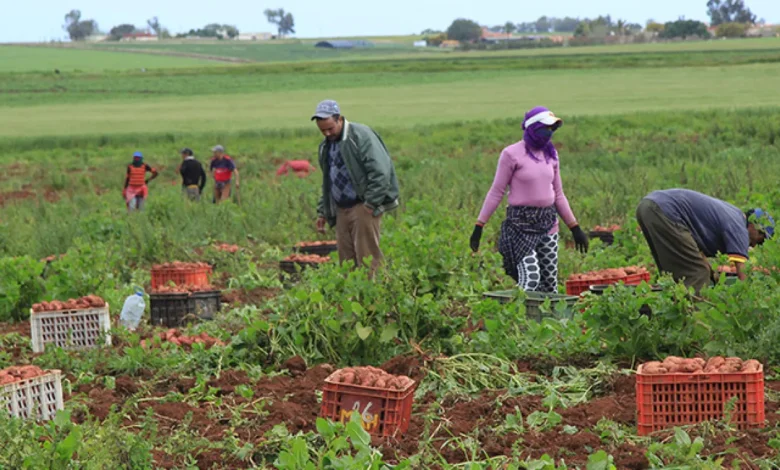
For example, farmers in the region of Qalaa Sraghna, the city of olives, suffer from this shortage, as they have to wait every turn to benefit from a young team of olive pickers. Moreover, labor wages have skyrocketed from 100 dirhams a day to 200 dirhams, an increase of 100 percent, representing 25 to 30 percent of the turnover in the field.
Prolonged schooling and the inferiority of manual labor
One of the main reasons for this phenomenon is the changing aspirations of the new generation. Thanks to the universalization of education and the regionalization of the training offer, more young Moroccans are pursuing secondary and higher education. The schooling rate has reached 95%, marking significant progress since 2000. The high educational level of the population is transforming the structure of the active population, creating an increasingly dynamic migration from the unqualified active population to the qualified active population.
Even if the education system does not lead to a qualified job, a young person with a degree is not likely to take on hard manual labor without social coverage and with low pay.
Migration: Double movement
Today, migration plays a crucial role in the scarcity of available labor, affecting the labor supply. Morocco remains a source country for agricultural workers to Europe, especially France, Spain and Italy.
Clandestine migration has reduced the number of workers, especially unskilled ones. After the health crisis, attempts to cross to the other side, which either end in success or death, have increased. According to the Interior Ministry, Moroccan authorities thwarted nearly 80,000 attempts to cross into Europe in 2024, a 4.6 percent increase compared to 2023.
The circular migration agreements between Morocco and Europe are also a source of labor drain. These agreements annually attract thousands of seasonal workers, both men and women. More than 16,000 workers were mobilized in direct recruitment campaigns to work in Spanish fields in 2024, according to the International Labor Office.
Moreover, the EU has granted more than 188,000 residence permits to Moroccans, putting Morocco in third place after Ukrainians and Indians.
Sub-Saharan migration: Partial solution
Morocco remains a country of migration but also a country of reception. Sub-Saharan migrants occupy an important place in Morocco's informal economy. But they do not replace Moroccan migrants, who see Morocco as a transit point to Europe. As a result, they are located in both urban and rural areas and remain concentrated in major cities such as Casablanca and Tangier.
In short, labor-intensive sectors are silently suffering from the scarcity of this factor of production. This situation warns of structural shifts in the active population that will negatively affect investments in sectors that are among the most wealth-creating sectors in Morocco. It is necessary to implement a concerted public policy, involving all actors, aimed at preserving the labor force through the implementation of the Labor Code, which requires social coverage and a decent living wage.