

Oujda intensifies market surveillance during Ramadan and seizes tons of spoiled items
Evil economyق
Local authorities in Oujda have reactivated their proactive plan to monitor markets during Ramadan by organizing commercial activities, ensuring respect for health standards and protecting the purchasing power of consumers. The operation, which started a few days before the holy month, includes organizing surprise field visits to enforce the directives of the Regional Mixed Committee for Vigilance and Monitoring of Market Supply and Prices.
Mohamed Atfawi, governor of the Eastern Province and governor of Oujda-Angad, stressed the need to mobilize monitoring teams to enforce the law and reassure consumers during a meeting held on Monday at the governorate headquarters. Surveillance efforts are distributed to commercial places, warehouses and agricultural-industrial units, with the aim of ensuring the quality of the products offered, respecting storage conditions, and organizing the supply of markets.
Other teams roam the city's peripheral neighborhoods, reminding merchants of the rules of fair trade and punishing violators. Mourad Benhamaz, head of the economic affairs department at the Oujda-Anjad Municipality, explained that this work is neither temporary nor seasonal, but requires constant vigilance throughout the year, with an active and permanent presence in places of high demand during Ramadan.
The campaign to combat the exploitation of high-demand events resonates with neighborhood associations, community activists and mosque imams, who agree on the importance of raising awareness about the ethics of trade. Hamid al-Khawi, a family man, stresses that it is not only about excesses or high prices, but also about mutual respect between buyer and seller, the health quality of products, expiration dates, the cleanliness of shops, and the organization of displays to avoid confusion in varieties and prices.
For his part, Hassan Fadel wishes that the monitoring teams would also focus on labeling the most consumed products in weekly markets, especially clothing items during Ramadan and on the eve of Eid al-Fitr, whose prices are significantly higher, adding: “It's time to cap prices and regulate the profit margin for some items.”.
Seasonal price fluctuations
The most consumed items recorded a slight increase in prices. Red meat ranges between 115 and 130 dirhams for a lamb, and between 87 and 100 dirhams for a calf. The price of white meat (poultry) changes according to demand, moving from Dh13 per kilogram two weeks ago to Dh18 currently. As for fish, it is scarce and expensive due to the turbulent state of the sea during the past weeks and the biological rest to preserve fish resources such as sardines.
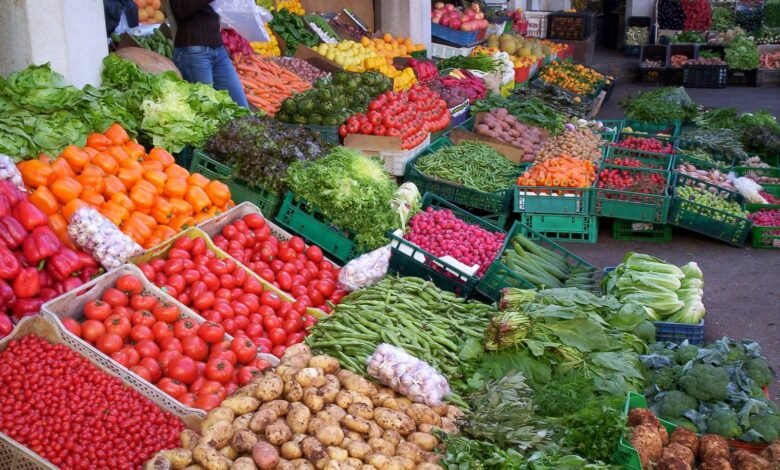
Vegetable prices have increased over the past week, which has become a habit at the beginning of every Ramadan. Vegetable traders offer several explanations, including the fragility of the waterlogged soil after the recent rains, which makes harvesting difficult and affects prices. Potatoes and tomatoes went from four dirhams to six dirhams, and onions exceeded 10 dirhams.
Adequate market availability
Despite these fluctuations, general data on consumption, supply and prices in the Oujda-Angad municipality, obtained from various sectors and administrative departments, as well as from inspection visits to local markets (from the beginning of the year to the end of March), indicate that the supply exceeds expectations. Most foodstuffs, especially those heavily consumed during the month, are available in sufficient quantities.
The latest report by the economic affairs department of the Oujda-Angad Municipality confirms that supply exceeds expected needs with stable prices, except for red meat and vegetables due to recent rains and harvest difficulties.
Complaints Mechanism and Oversight Outcome
To implement the measures and procedures adopted for this month and to protect the purchasing power, health and safety of consumers, a green number 5757 was set up to receive complaints. The economic affairs department received 48 calls in 2025, including 7 complaints related to the follow-up tasks, which concerned the quality of the products offered, health protection, and prices. Other concerns, which do not fall within the jurisdiction of this department, related to the high prices of some liberalized products and the billing of water and electricity prices.
In total, 144 tons and 967 kilograms of food unfit for consumption were seized and destroyed. Between 2024 and January 2026, 905 violations were recorded related to the Price Protection and Competition Law, the Consumer Protection Law, and the Anti-Plastic Bag Law.