
Nadia Fattah presents Finance Law 2026: Growth of 4.6% and investment of 380 billion dirhams
Oriental Eco
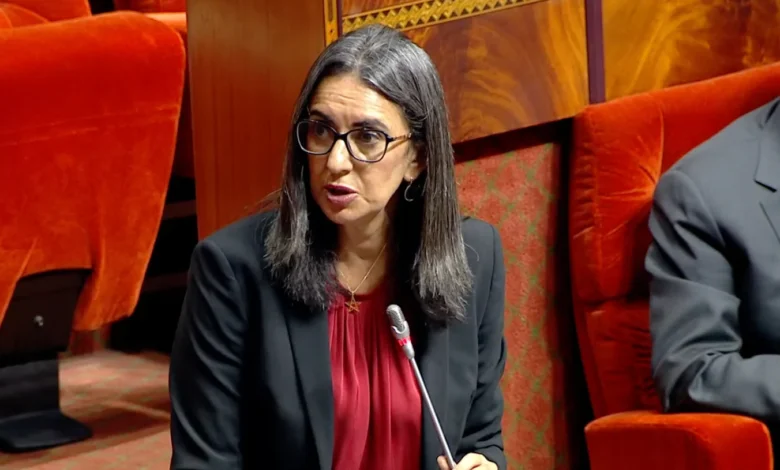
On October 20, Nadia Fattah, Minister of Economy and Finance, presented to Parliament the draft Finance Law 2026, which focuses on consolidating economic gains, integrated territorial development, the social state, and fiscal sustainability. The draft comes in a gradually improving economic context, with projected GDP growth of 4.6%, limited inflation at 2%, external demand growth of 2.3% (outside phosphate), with expected grain production at 70 million quintals and butane gas price at $500 per ton.
The draft Finance Law 2026 is based on several strategic axes aimed at strengthening Morocco's position among emerging countries. The total public investment amounts to 380 billion dirhams, directed towards transportation infrastructure, including railway projects, airport expansion, highways, the Atlantic port of Dakhla, and the West Mediterranean port of Nador. The project also allocated 16.4 billion dirhams to ensure water security by providing potable water, building new dams, connecting water basins, and desalination of sea water with the aim of reaching 1.7 billion cubic meters per year. In the energy field, the project aims to raise the share of renewable energies to 45% of the electricity mix, with the launch of liquefied natural gas (LNG). To support small and medium-sized enterprises and startups, 2 billion dirhams has been allocated for a technical and financial assistance mechanism.
As part of the implementation of the royal directives contained in the October 10, 2025 speech, the draft law launches a new round of integrated territorial development programs, based on a participatory, bottom-up approach and integrated territorial governance that ensures the convergence of public policies. Based on a comprehensive territorial diagnosis that identified 542 emerging village centers, the government has prepared a priority program for 77 centers covering the entire national territory in coordination with various local actors. In 2026, the focus will be on accelerating the implementation of action plans for 36 pilot emerging village centers, at a total cost of 2.8 billion dirhams.
In terms of social protection, 11 million citizens benefit from compulsory sickness insurance, with government funding amounting to 10.5 billion dirhams by 2026. In addition, 4 million families benefit from direct support, with a cumulative amount of 44.6 billion dirhams until September 2025, while 29 billion dirhams have been allocated for this device in 2026. The health budget rose to 42.4 billion dirhams, an increase of 10 billion compared to 2025, while the education and training budget amounted to 97.1 billion dirhams, an increase of 11.5 billion, with the creation of 19,344 new positions in the sector.
The draft Finance Law 2026 continues structural reforms while maintaining fiscal balances, by reforming the organic framework of public finance to ensure results-based budgeting, greater transparency, and stronger parliamentary participation. It also includes public sector reform by restructuring public institutions and enterprises, refocusing them on their strategic missions, and diversifying financing methods. The tax reform continues in accordance with Framework Law 69.19 to achieve fairness and expand the tax base, along with administrative decentralization, modernization of the administration, and reform of the judicial system by reviewing the judicial map and digitizing the courts.