
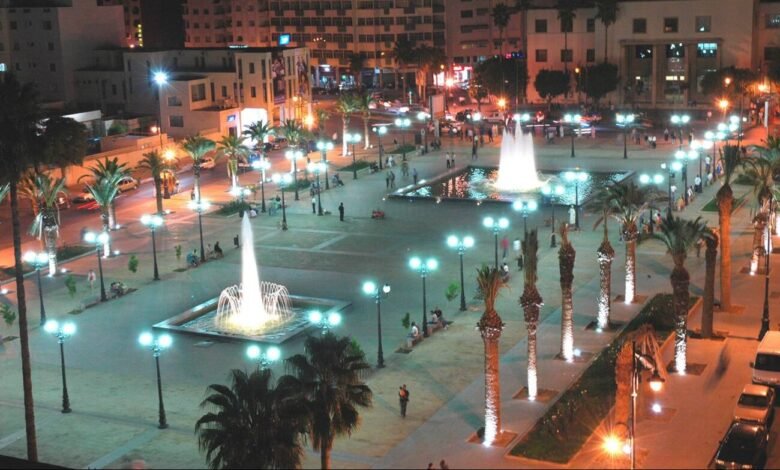
Modernizing public lighting in Oujda with 20 million dirhams to boost economic attractiveness
Oriental Eco
The four entrances to the city of Oujda are undergoing a significant transformation in the field of public lighting, with the lighting renovation project reaching more than 60 percent completion. The project includes Crown Prince Street leading to Oujda Angad Airport, Bakkai Street towards the highway performance point, Zayed bin Sultan Street towards the ecological center in Mezouaria, and Mohammed V Street from Omar bin Abdel Aziz High School towards the industrial zone.
AED 20 million investment to modernize infrastructure
The Oujda Urban Community has allocated 20 million dirhams to modernize public lighting along 28 kilometers of urban roads. The work includes restructuring damaged underground networks, repairing poles and arms, modernizing lighting equipment, as well as specialized lighting for poles.
Replacing energy-consuming equipment with LED technology is expected to reduce the energy bill by about 60 percent of current expenditures, with a payback in less than six years. “The money saved thanks to this energy-efficient approach will contribute to launching other projects to modernize the city and improve its attractiveness,” explains Mohamed Mouzouni, chief engineer of the technical department of the Oujda Community.
2200 LED lights in 5 months
2,200 new LED lamps will be installed in less than 5 months, representing 4.6 percent of the current lamp fleet. Smart management systems will help control disruptions, optimize production and distribution, and respond quickly to emergencies.
For years, Oujda has been suffering from an aging public lighting network, which has burdened the community's budget with frequent maintenance expenses for equipment that does not meet the required standards according to Moroccan standards NM13201. Residents welcome these long-awaited interventions, especially since the quality of public lighting has a direct impact on daily life and economic activity.
Direct impact on commerce
Zahreddine Tibi, a community organizer, points out the importance of urban entrances: “Entrances are not just arteries leading to the city center, they are the first keys to a coordination necessary for comprehensive urban development.” These hubs facilitate access to various administrative, residential, commercial, commercial, sports, cultural and tourism components.
Oujda is notorious for closing most of its commercial activities before 7 p.m. in winter and 8 p.m. in summer, damaging the commercial sector and forcing residents to rush to get what they need. “It is abnormal for major commercial centers to close at 10 p.m., while in the city center and in various grocery stores we close the curtains immediately after sunset, due to broken public lighting,” said Ahmed Amhiaoui, a merchant at Tangier market in Oujda.
The city's merchants, especially in areas of high commercial density such as Al-Quds Souk, are calling for the modernization of high-traffic areas, saying that public lighting is a key element in revitalizing commercial activity and ensuring the safety of property and citizens.
This initiative is part of the urban rehabilitation programs overseen by the community and the state, which created a specialized company for this purpose. “The quality of training and education, multiple services, recreational spaces, and accessibility infrastructures will all benefit from the efficiency of public lighting, potable water, telecommunications and transportation networks,” Mouzouni emphasizes, noting the pivotal role of these projects in enhancing the city's economic attractiveness to potential investors and employers.