
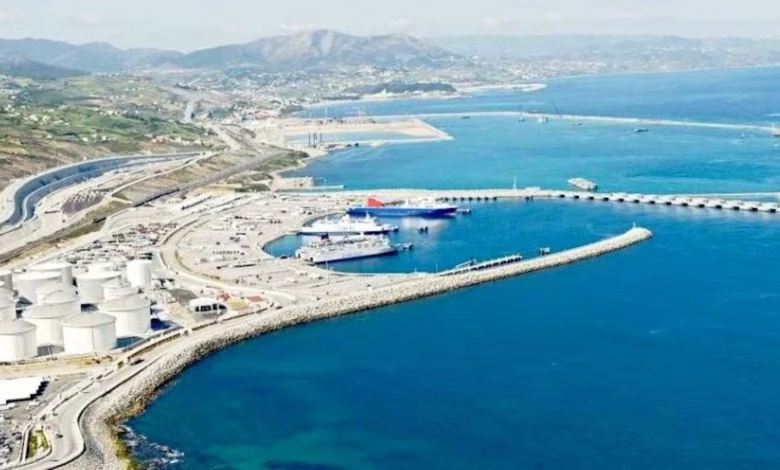
How does the Western Mediterranean port of Nador contribute to Morocco's geostrategic weight?
Economy of the East
Morocco's maritime strategy is taking shape with the completion of what can be called the Minaoui Triangle, which combines Tangier Mediterranean on the Mediterranean front, Nador West Mediterranean close to the east, and the Atlantic port of Dakhla in the far south. The port is no longer just a commercial infrastructure, but a lever of logistical sovereignty and a card in geopolitical calculations.
Nador West Mediterranean: Launch imminent in the fourth quarter of 2026
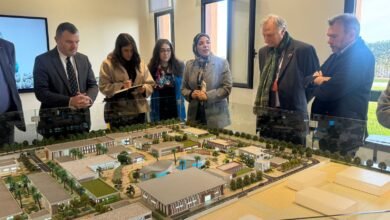
In January 2026, King Mohammed VI chaired a meeting that set the operational launch of the West Mediterranean port of Nador for the fourth quarter of 2026. This integrated project, which includes an industrial, logistics and energy zone, has attracted more than 51 billion dirhams in public and private investment to date.
This port is part of a strategic logic that aims to cover the Kingdom's two maritime fronts, diversify entry points, and promote logistical sovereignty in a comprehensive sense, namely the ability to secure the flow of goods, attract shipping lines, and link the port to an integrated industrial and energy base.
Tanger Med: Numbers that redraw the competition map
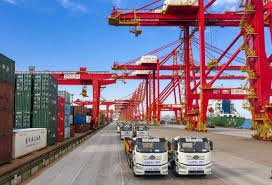
In 2025, Tanger Med Port handled 11.1 million twenty-foot equivalent units (EVP), an increase of 8.4% compared to the previous year, while the total cargo volume reached 161 million tons, a growth of 13.3%.
To get a sense of the magnitude of this performance, it is enough to compare it with Spanish ports: Spain's public interest ports together registered 18.6 million EVP in 2025, 5.6 million for the Port of Valencia, 4.7 million for the Port of Algeciras, and 3.7 million for the Port of Barcelona. Tanger Med alone exceeds the combined volume of the ports of Valencia and Algeciras, an indicator of Morocco's position in the global maritime transshipment market.
The port as a geopolitical asset
“Logistics in general is a key pillar of Morocco's geostrategic positioning,” said Zakaria Abu Dahab, professor of international relations at Mohammed V University, adding that “port connectivity has become a pivotal lever for the Kingdom's economic and strategic projection.”.
“This agreement, in addition to its commercial dimension, has a significant geopolitical significance,” he said, citing a contract won by Marsa Morocco to operate a port in Liberia.
In an international context of escalating competition for control of ports, especially in light of European and American concern about Chinese expansion in global port infrastructure, Morocco seems to have built its position gradually and methodically, far from the current geopolitical hype. On February 17, 2003, King Mohammed VI launched the construction of the Tanger Med port, describing it as ”the nucleus of a port complex for logistics, industry, commerce and tourism,” as part of an approach that seeks to strengthen Morocco's role as a mediator between Europe and Africa, and the Mediterranean and the Atlantic.