
A women's cooperative in Jarada launches a pioneering project to raise goats and process milk
Oriental Eco
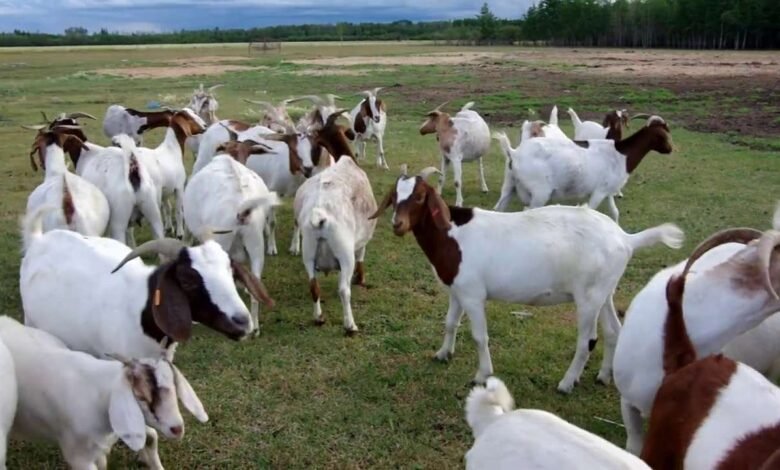
In a step towards enhancing the economic independence of rural women, the women's cooperative “Dahr Lebayed” in Lawinat, Jarada region, has launched a pioneering experiment in raising goats and transforming their products. The project, which involves thirty women, is the first of its kind in the eastern region and aims to transform a traditional low-impact activity into an organized production unit capable of generating a sustainable income.
The cooperative provided eighty dairy goats, a corral compliant with applicable standards, and a modern cheese factory project, under a partnership between the regional directorate of the Ministry of Agriculture, Fisheries, Rural Development, Water and Forestry and the Jerrada Regional Council. Eight million dirhams have been allocated for the construction of this production unit within the “Ihya” program, partly funded by the French Development Agency (AFD).
From Traditional Activity to Structured Project
Rabia Lamghalafi, the cooperative's treasurer, explained that the project represents a quantum leap for women seeking financial independence. The prevailing practice was limited to raising one or two goats with no real impact on the standard of living, while the new project allows them to evolve into an organized production unit supported by technical and commercial frameworks.
Lamghalafi emphasized that the accompaniment guaranteed by the Ministry of Agriculture's managers and officers, along with the provision of cattle and fodder, boosts the beneficiaries“ confidence and gives them the means to develop an income-generating activity. A cooperative member in her 40s expressed her enthusiasm: ”By transforming fragile activities into a structured project, this initiative restores confidence and independence to the beneficiaries. "It is not just a grant, but an opportunity to generate our own income and become active in local development.
For his part, Abdulrahman Anfalous, Regional Director of the Agriculture Sector, stressed that the Ministry of Agriculture and its institutional partners not only provided the herd and food inputs, but also ensured health, technical and organizational follow-up, with the aim of ensuring an optimal framework for the cooperative and guiding it towards a market logic based on improving productivity and incomes.
Cheese Factory and Engaging the Next Generation
To give the initiative a full dimension, a cheese factory is planned within the community. This conversion unit will enable the beneficiaries to valorize goat's milk in various products, especially goat's milk cheese and local products characteristic of the highlands, such as sour milk, fermented milk with a traditional texture, and sauces. As for butter, over time it acquires a distinctive local flavor, especially when seasoned with medicinal plants from the region.
Under the logic of local development, the management of the factory will be entrusted to the members' children, girls and boys, who will handle all operations from production to marketing. The unit will be equipped with machinery, refrigerators and transportation vehicles. Before that, these young people will have to establish a second cooperative in charge of managing and exploiting the factory, while benefiting from targeted training in management, production and marketing of the products.
The dairy unit will not be limited to the production of the mother cooperative, but will be open to all goat farmers in the region who wish to market their milk. Three vehicles will be purchased: One for collecting milk, one for transporting feed, threshing and animals, and a refrigerated one to ensure the cold chain required for the transportation of the final products.
Investment details
The launch of this corral is part of a comprehensive program worth eight million dirhams. Of this amount, Dh2 million was allocated for the construction of the corral, Dh600,000 for the purchase of 76 selected goats and four breeding bulls of a breed approved by the National Office of Agricultural Advisory, and an additional Dh600,000 for the purchase of equipment. The construction of the cheese factory, completed by the regional council, required 600,000 dirhams. The program also includes the acquisition of another 350 goats worth two million dirhams, as well as the purchase of three vehicles. The feeding of the herd is currently guaranteed thanks to solidarity initiatives from associations and individual initiatives.