
In the presence of El Kaddouri Government launches Dh800 million vocational training program

Oriental Eco
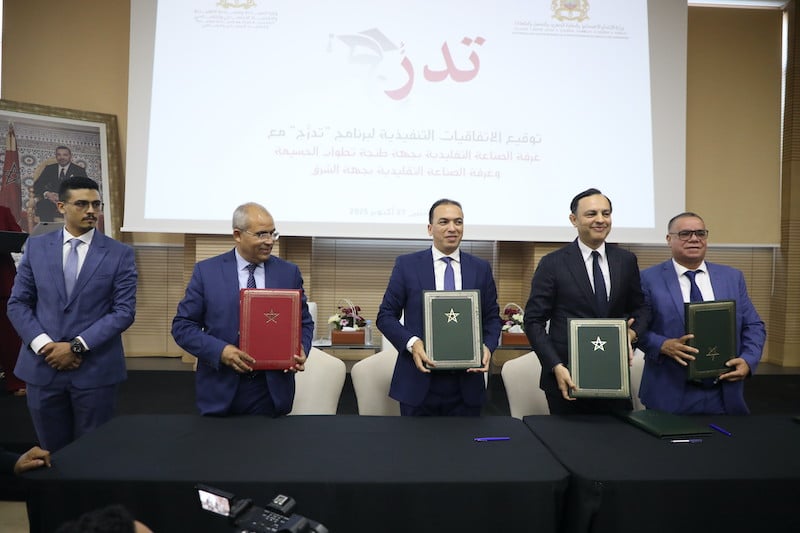
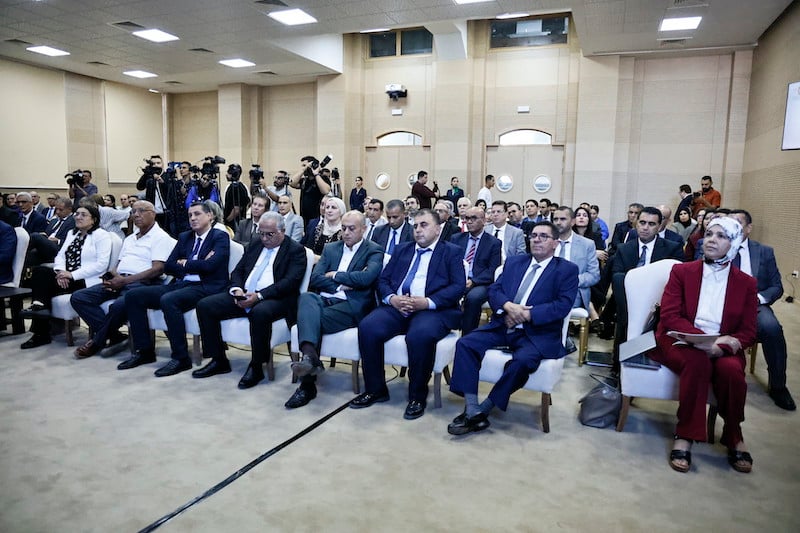
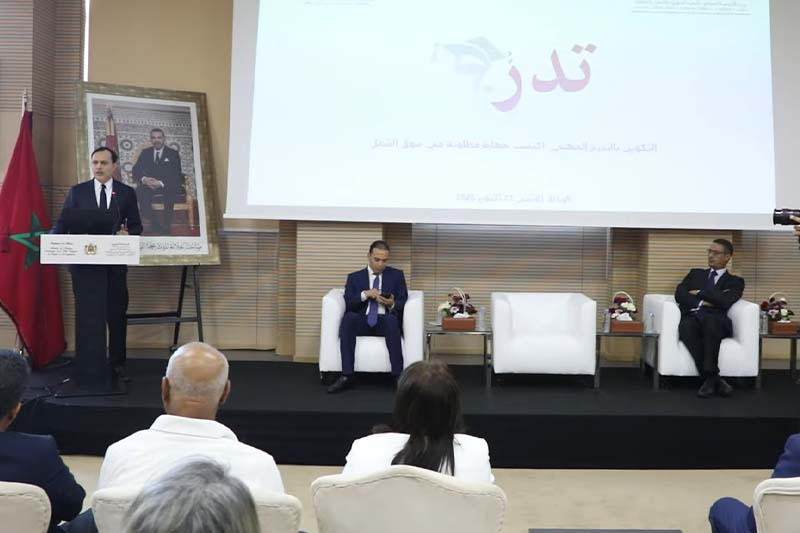
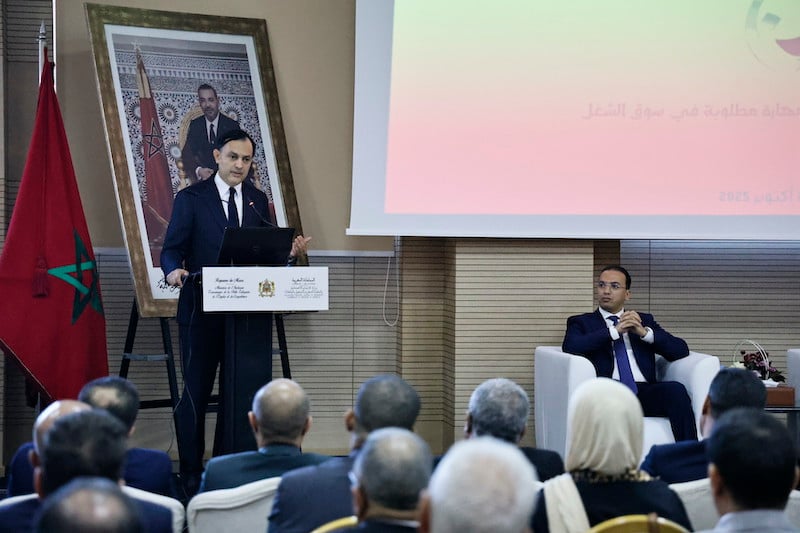
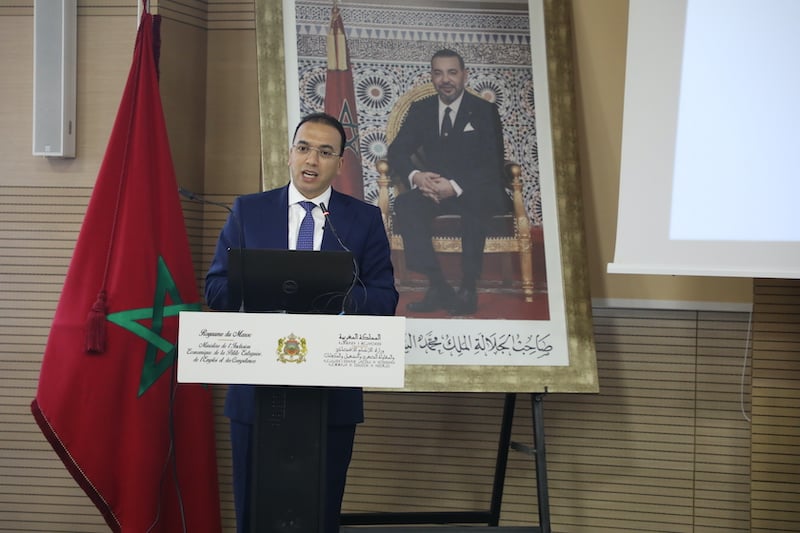
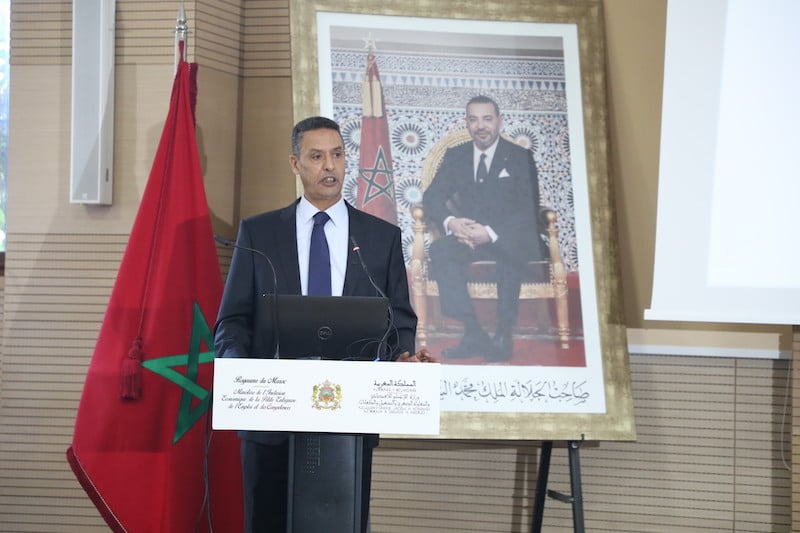
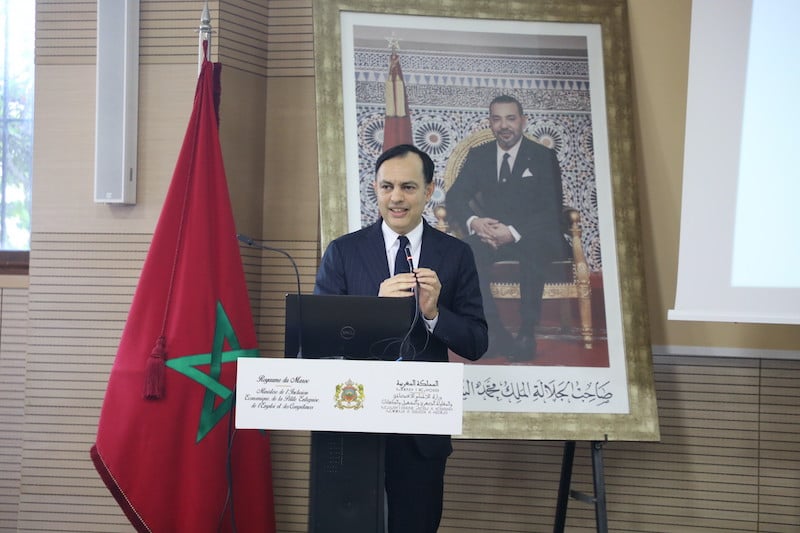
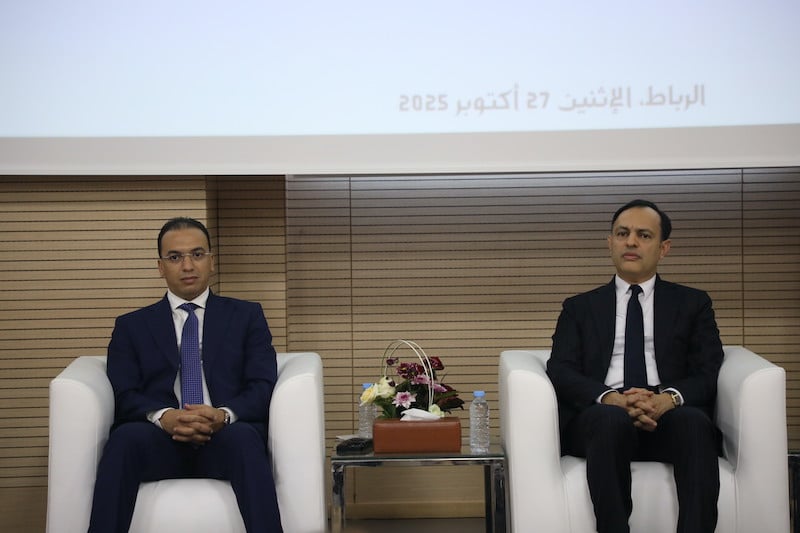
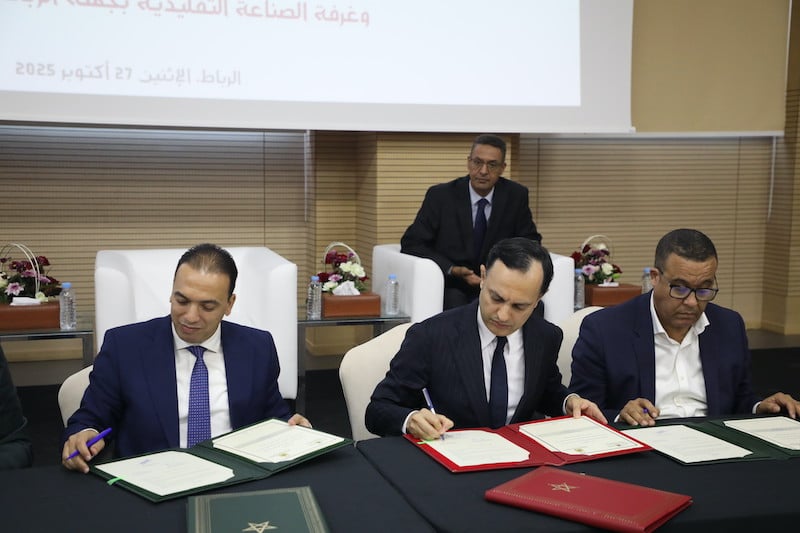
The Ministry of Economic Inclusion, Microenterprise, Employment and Skills announced on Monday the launch of the national program “Tadriraj” for apprenticeship training for the traditional industry sector, a move aimed at promoting the integration of youth into the labor market through applied training, according to the Ministry of Economic Inclusion, Microenterprise, Employment and Skills. This came during an official ceremony that witnessed the signing of 16 partnership agreements between the Ministry of Economic Inclusion and the Ministry of Tourism, Traditional Industry and Social and Solidarity Economy, in the presence of Younes Skouri, Minister of Economic Inclusion, Micro-Entrepreneurship, Employment and Skills, Lahcen Saadi, Minister Delegate for Traditional Industry, Chef Sidati, President of the University of Chambers of Traditional Industry, and Mohamed El Kaddouri, President of the East Region Chamber of Traditional Industry, to implement the program for the development of vocational training for 2025-2030.
This program is part of the government's 2030 roadmap for employment. It is one of the strategic pillars aimed at enabling young people, especially those without academic degrees, to access the labor market through practical and theoretical training in craft professions. The government has allocated a total budget of about 800 million dirhams for this program for the years 2025-2026, reflecting the importance it attaches to vocational training as a lever for economic and social development.
Partnership agreements with chambers and professional associations
The ceremony included the signing of 16 partnership agreements for the implementation of the apprenticeship development program, including 12 agreements with chambers of traditional industry at the national level, including the Chamber of Traditional Industry in the East, headed by Mohamed El Kaddouri, as well as 4 agreements with associations of training and rehabilitation centers in traditional crafts. These partnerships aim to ensure effective implementation of the program on the ground and provide a suitable environment for the training of a new generation of artisans.
Tackling unemployment through apprenticeships
Younes Skouri, Minister of Economic Inclusion, Microenterprise, Employment and Skills, said that apprenticeship is one of the effective solutions to the unemployment issue that affects a large group of young people who do not have academic degrees. He explained that two-thirds of Morocco's unemployed, about 900,000 people, belong to this category, which lacks sufficient programs that directly target them.
The number of apprenticeship beneficiaries currently does not exceed 25,000 people in all sectors, making the expansion of this system a national priority. The apprenticeship model is based on a combination of practical and theoretical training, where the apprentice spends 80% of his time in practical training with a traditional manufacturer and 20% in theoretical training in training institutions, providing real opportunities to acquire practical skills and integrate groups with limited education into the labor market, he said.
Through this program, the government aims to reach 100,000 apprentices in the coming years, the minister said, stressing that the popularization of apprenticeships is one of the most prominent measures included in the government's employment policy. “We have counted more than 200 professions subject to apprenticeship, including about 80 in the traditional industry sector, which reflects the diversity of opportunities available to young people,” he added.
Traditional industry is an economic and social pillar
For his part, Lahcen Saadi, Minister Delegate for Traditional Industry, expressed his pride in launching this program, which he described as the fruit of coordination and institutional cooperation between the employment and traditional industry sectors, after months of work and consultation with various stakeholders. He explained that the program comes in response to the needs of the labor market, as the Kingdom is witnessing a growing demand for qualified workers in the fields of construction, industry and craft services, especially in light of the country's major projects in preparation for the organization of the 2030 World Cup.
Saadi noted that the traditional industry sector is not only a cultural heritage, but an economic and social pillar, stressing that the apprenticeship program will contribute to preserving endangered professions by training a new generation of artisans. He added that the program will enable the integration of thousands of young people into the labor market, whether as employees or as owners of workshops and small businesses, stressing that the project reflects a clear vision to empower Moroccan youth with opportunities for success.
The role of professional chambers in downloading the program
Shakaf Sidati, president of the University of Chambers of Traditional Industry, stressed that this program is a strategic turning point in the process of promoting the traditional industry sector and fostering self-employment and structured employment. He explained that apprenticeship training reflects the state's will to achieve integrated and sustainable development in which employment is the cornerstone of dignity and full citizenship.
Sidati stressed that the traditional industry is not just an economic activity, but represents a nation's memory and cultural identity, and that supporting it through training programs is a way to preserve the heritage of the ancestors and transfer the experience to new generations.
The “Tadrej” program is expected to enable thousands of young people, especially in rural and semi-urban areas, to acquire real vocational skills that will enable them to access the labor market, whether within the framework of self-employment or through integration into enterprises. This program is also expected to restore the status of vocational training and valorize handicrafts and crafts, which are a lever for local development and the creation of added value, in line with the directives aimed at promoting decent jobs and achieving regional justice.