
Predator abandons its first plan and chooses to concede to the gas resources of Carrefour
Oriental Eco
During a presentation to investors on October 16, 2025, UK-based Predator Oil & Gas unveiled an update on its projects in Morocco, specifically on the Kercef gas resources that are facing difficulties in exploitation. The company now intends to adopt a flexible divestment option for its gas assets in Kersef, instead of the initial plan to sell the gas in 2026 in the form of compressed gas similar to the gas marketed in the West fields.
The British company had previously hoped to apply for an exploitation license during the third quarter of 2025 and make a final investment decision before the end of the year. However, production tests on the Mo-3 well conducted in August 2025, which contains biogenic gas, were inconclusive to allow for commercial gas production, prompting the company to change its strategy.
At the beginning of the meeting, Predator's CEO Paul Griffiths dismissed the rumors that have emerged since the company's AGM, emphasizing that he will never abandon his projects in Morocco. Griffiths provided new data to understand the realities of the Krsef gas and the options available for its development.
Why the flexible waiver of the CRSF license?
After analyzing the data obtained from the tests, the company decided to drill a new well. Predator abandoned the partial relinquishment option in favor of a full and flexible relinquishment option, given the impossibility of dividing the license into several pieces. The company believes that its development has moved from zero gas resources in the license to an assessment of potential resources with the potential to increase based on the company's latest estimates.
Based on geophysical data re-reading, Predator has identified two distinct, potentially gas-rich, water-impact-free fan systems that could be targeted at Mu-3. These shallow gas resources represent a stratigraphic field potential of 81 square kilometers, of which 16 square kilometers have been proven at the Mo-3 and Mo-1 locations.
In preparation for the assignment process, Predator must first certify the CRESIF resources with an updated technical report to the potential acquirer, which will compile all the discoveries made by the company, including the gas resources identified in the four wells drilled, as well as the proven presence of helium.
Prioritizing the drilling of the Mo-6 well before any concession
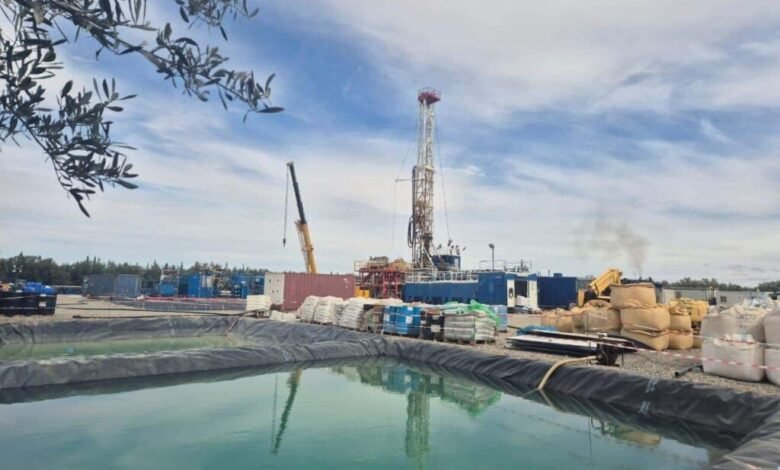
To avoid damaging the layers discovered in the Mo-3 well, Predator has identified a new drilling location, Mo-6 which will avoid the technical issues that did not allow for an economical and safe gas flow. The new well was initially scheduled to be drilled before the end of 2025, but is now expected to be programmed in the first or second quarter of next year.
According to the British company, the need to import drilling equipment from abroad is creating unforeseen delays. Added to this is the recent completion of a drilling program that identified the appropriate mud system and pipe design, which may include an additional pipe string to resolve some of the difficulties.
Paul Griffiths said: “There's nothing more exciting for a new partner, even if it's a giant company, than having a drilling program coming up. ”This is the driving element that drives the assignment process forward. Given its importance, Predator must simultaneously progress the flexible concession and the drilling of the Mo-6 well. The latter is supposed to open up the possibility of exploiting Kersef gas and at the same time promote the gas asset marketed by Predator.
Griffiths added: “The value here is not in producing gas or flowing gas or drilling a well. The value here is the overall value of the company that is formed. No big player in a country is going to buy a company based on a tested well, or two wells, or a Mo-6 well. It's about knowing what is the opportunity for the next 20 years, what is the strategic opportunity to be a major player in the Moroccan gas market.”.
Based on Predator's assessments, the new well should unlock up to 12 billion cubic meters of potential, uncertified gas resources, six times the estimated resources at Mo-3. As a reminder, this data can only be verified after the well is drilled and remains speculative until its actual content is discovered.
What about thermal gas at the Mo-5 site?
At Mo-5, Predator was also hoping to find potential resources estimated at between 4.8 and 11 billion cubic meters of natural gas. The plan to seek a partner for Mo-5 is clearly no longer on the table to fund a new well or a 3D seismic campaign to unlock these resources, as it is difficult to fractionalize the license. Instead, the company is now focused on developing the biogenic resources before pulling out.
Paul Griffiths confirmed our earlier reading about the absence of natural gas in the Mo-5 well. However, he sees a new development opportunity here, due to the presence of salt caverns that could serve as a natural gas storage site.
The takeaway from Predator's latest announcements is that, as a small company, its development is advanced enough that an operator with greater financial capabilities could acquire the project. The total developed assets represent a complete marketable package, including a large area of biogenic gas, the potential for volume expansion, helium traces, a natural storage site, and programmed drilling capable of confirming the potential of the biogenic gas field.
For Predator, this flexible relinquishment option, conditional on the achievement of performance targets, guarantees the opportunity to realize significant financial returns while at the same time relaunching the gas project by a new developer. This assignment should only take place after the drilling of the Mo-6 well, as the company does not intend to relinquish this asset at a lower price, given the already proven opportunities.