
Eastern Province tops the ranking of dam stock improvement ahead of the agricultural season
Oriental Eco
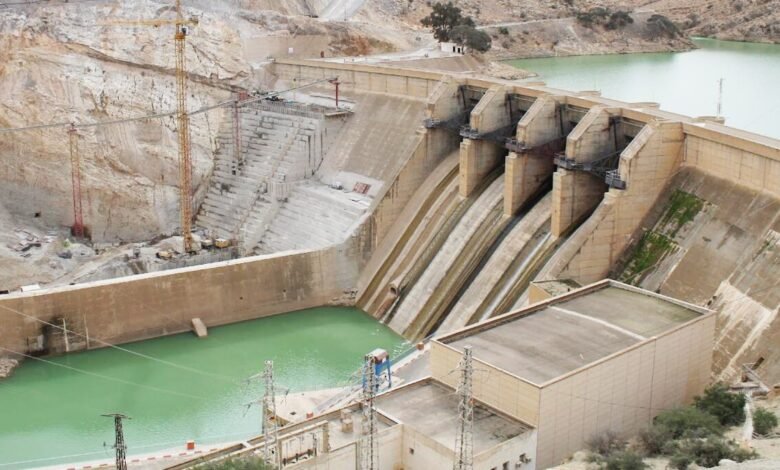
As the new agricultural season is about to begin, Morocco's dam reserves have improved slightly compared to last year, offering a glimmer of hope for a farming sector that has been weakened by successive years of drought. The eastern region stands out as one of the regions that has seen a significant improvement in water reserves, especially with the recent rainfall in the region. The Mohamed V Dam near Oujda reflects this positive development, with its filling rate rising from 12% on the same date last year to 24% currently, raising hopes for a better farming season for farmers in the eastern region.
As of October 13, 2025, the total water reserves in Moroccan dams amounted to 5.38 billion cubic meters, equivalent to 32.11 TP3T of total capacity. Compared to last year, the stocks of the major dams have not changed much, except for the east and southeast regions, which have recently experienced several waves of rainfall. These lifesaving rains should recharge dams and aquifers that have been exhausted by successive years of drought.
In the north, the dams of the Locos and Sebou basins continue to hold the largest reserves, accounting for half of the Kingdom's current reserves. This superiority comes thanks to the Wahda Dam, which currently holds 1.5 billion cubic meters, and the Wadi Makhazine Dam, which holds 505 million cubic meters. These dams constitute the main strategic asset for national water security.
Utilizing available satellite data, a number of dams show significant improvements in filling levels compared to the previous year. In the southeast region, the Hassan Dakhil dam recorded a significant improvement in its reserves, with the filling ratio rising from 49% to 58%, thanks to precipitation that raised the water level of Oued Ziz, the dam's main tributary. This improvement is a positive indicator for agricultural activity in the region.
The Sidi Mohamed Ben Abdallah Dam, the main source of water supply for Rabat, Casablanca and their regions, recorded a clear improvement in its filling rate compared to the same period last year, moving from 33% to 67%. Contrary to what might be thought, this notable increase is mainly due to the completed hydraulic connection with the Sebou basin, and not only to the recent precipitation recorded in the region. This strategic project has proven its effectiveness in ensuring the water security of the economic capital.
The Messira Dam, the main source of drinking water for the Casablanca-Settat region, is still in a very critical state. While last year its reserves reached a record low of 0.3% on October 13, 2024, today they barely reach 2%, or about 65 million cubic meters. This amount is woefully inadequate to meet the needs of the megacity, which has turned to alternative solutions. To ensure its water supply, it is increasingly relying on the Sidi Mohamed Ben Abdallah Dam and, increasingly, on desalinated water from the Jurf al-Asfar plant.
In the same context, a recent study showed that dam water represents the best water quality in Morocco compared to groundwater and river water, which suffer from pollution due to human activities. This emphasizes the importance of preserving these resources and protecting them from any potential pollution.
Back in the East, the improvement in dam reserves promises a better farming season after lean years. The region, which relies heavily on irrigation and irrigation farming, is waiting for more precipitation to ensure the continuity of agricultural activity. Farmers in the eastern region are betting on the continuation of this water improvement to revitalize their crops, especially cereals and other crops that form the backbone of the local economy.
More rainfall is urgently needed to refill dams and replenish water springs, especially with the start of the new agricultural season. The bet is now on continued rainfall in the coming months to ensure a successful farming season and ease the pressure on limited water resources, whether in the East or the rest of the Kingdom.